October 28, 2026
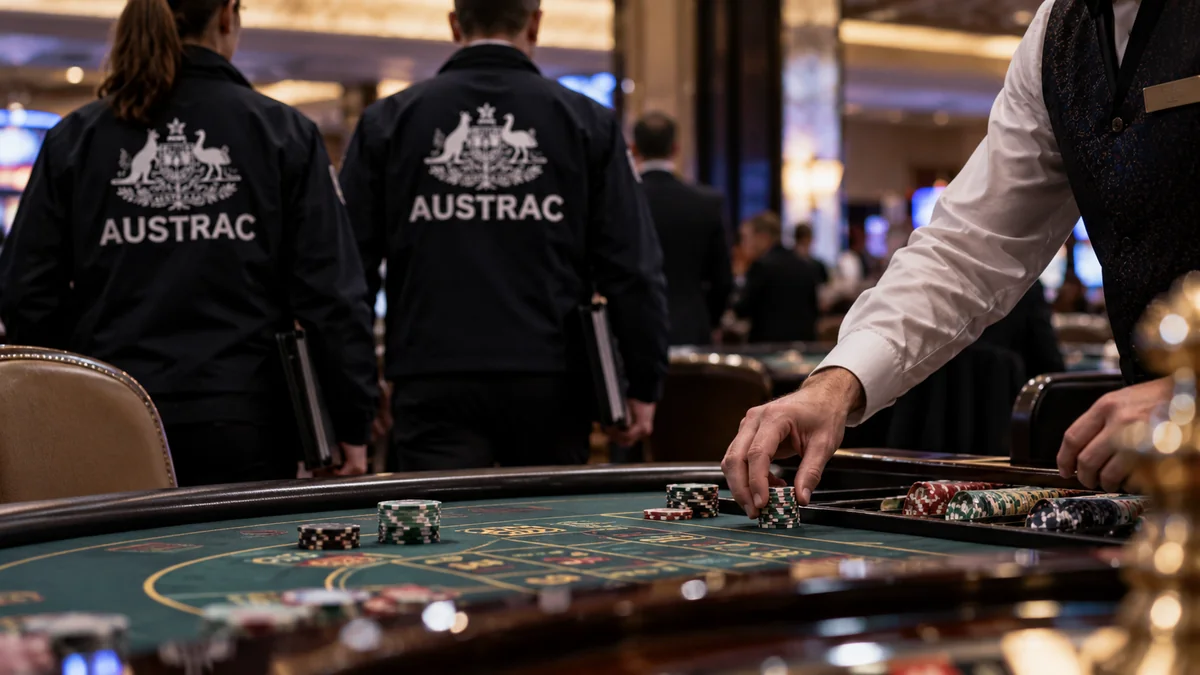
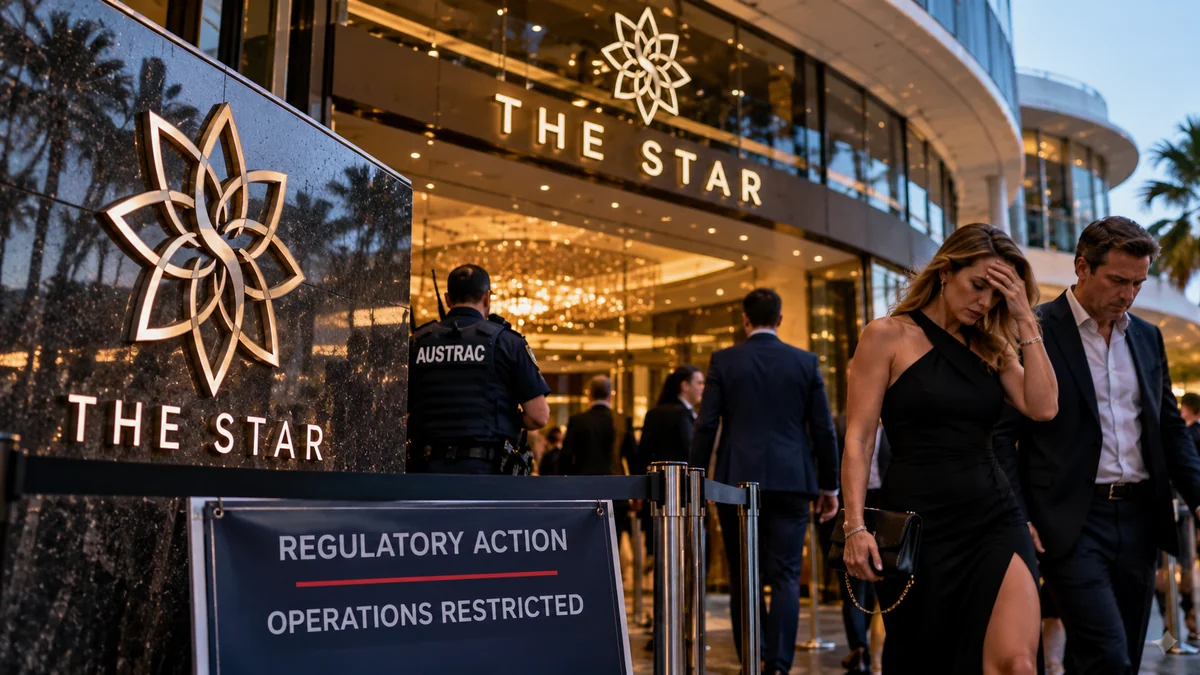
Australia's Federal Court has fined The Star Entertainment Group A$260 million for anti-money laundering breaches — less than AUSTRAC's A$400 million ask, but well above the A$100 million Star said it could afford.
Australia's Federal Court has ordered The Star Entertainment Group to pay a A$260 million penalty for years of anti-money laundering failures at its Sydney and Gold Coast casinos. The fine falls between the A$400 million sought by financial intelligence agency AUSTRAC and the A$100 million that Star warned was the most it could absorb without being pushed towards liquidation.
Key takeaways
- Justice Cameron Moore imposed a A$260 million penalty (about US$183 million) for repeated breaches of anti-money laundering and counter-terrorism financing law.
- AUSTRAC had asked for A$400 million; Star argued anything above A$100 million could force it into liquidation.
- A$195 million relates to The Star Sydney and A$65 million to the Gold Coast, payable in four equal instalments over 19 months.
- The judge called the conduct "egregious" and said the fine would have been higher without Star's remediation work.
- Star's chairman says the company can pay from cash and operating cash flow; its shares were placed in a trading halt.
A fine set between two extremes
The penalty brings to a close a civil case AUSTRAC launched against Star in 2022. The regulator accused the company of failing to properly manage the money laundering risks that came with its dealings with the Asian junket operator Suncity and its funder, and of continuing to do business with them even after it became aware of reports linking them to organised crime.
When it came to setting the number, the two sides were far apart. AUSTRAC argued that A$400 million was appropriate. Star, which owns casinos in Sydney and on the Gold Coast and operates one in Brisbane, told the court that a penalty above A$100 million, payable within a year, would be difficult to fund from its available liquidity and could push it into liquidation.
Justice Moore rejected both figures. He said A$100 million was too low and A$400 million too high, and explained that he had to balance two competing aims: deterring Star, and other companies, from putting profit ahead of compliance, while also taking account of what had happened to the business since the breaches and its current financial position.
"It is important that Star be deterred from ever putting profit over [anti-money laundering] compliance. It is important that other entities are sent the message that conduct of the sort engaged in by Star will attract a significant penalty and is not worth the risk."
— Justice Cameron Moore, Federal Court of Australia
The judge noted that Star's profitability meant it would likely need to raise money to pay any penalty. He also said the fine would have been larger had it not been for the significant remediation programme the company now has under way, and because Star had already been penalised for conduct that "significantly overlaps" with the matters in this case.
How the penalty breaks down
| Item | Amount |
|---|---|
| Penalty sought by AUSTRAC | A$400m |
| Maximum Star said it could manage | A$100m |
| Penalty ordered by the court | A$260m |
| — attributed to The Star Sydney | A$195m |
| — attributed to The Star Gold Coast | A$65m |
| Payment schedule | 4 × A$65m, final instalment May 2028 |
The heavier share for Sydney reflects the greater number of contraventions at the flagship property. The first instalment falls due next month, giving Star roughly a year and a half to spread the cost across its cash flows.
"Not mere oversights"
The judgment paints a stark picture of how the casino operated during the period in question. The court heard that a man with known criminal links had moved hundreds of millions of dollars through the casino. Justice Moore said that helping customers move money overseas, and turning a blind eye to customers who posed a money laundering or terrorism financing risk, had been "a significant part of Star's business".
He described the conduct as "egregious", adding that "they were not mere oversights from time to time". According to the judge, the number of individual contraventions across different parts of the anti-money laundering legislation was "immeasurable", which meant the theoretical maximum penalty was an incalculably large amount.
Justice Moore also compared the case with earlier anti-money laundering actions against Crown and SkyCity, while pointing out that there were significant differences between them.
AUSTRAC: profit over compliance "on a large scale"
AUSTRAC said the A$260 million penalty follows other significant fines and regulatory action already taken against Star after casino inquiries in New South Wales and Queensland. Chief executive Brendan Thomas said the penalty reflected the seriousness of the breaches and built on earlier state and Commonwealth sanctions to provide ongoing deterrence.
"The Court found The Star did not simply fail to complete the right checks. It allowed high-risk customers to gamble without properly establishing where their money came from and put profit over compliance on a large scale. AUSTRAC will not tolerate companies putting profit over their obligations to the Australian community."
— Brendan Thomas, Chief Executive, AUSTRAC
Thomas said Star had allowed junkets to carry out highly suspicious activity without any controls stepping in and, despite its own concerns and the well-known risks around junkets, had kept giving them access to its private gaming rooms. "Due to The Star's admitted deficiencies in monitoring, we cannot know how much money high-risk customers pumped through its casinos," he said. "But we do know the risks involving significant amounts of money, and instead of closing the door to those risks, The Star's operations exposed the casino and Australia's financial system to them."
Independent federal MP Andrew Wilkie, a long-time critic of the gambling industry, responded with a one-word statement: "Good."
Can Star afford it?
The central question now is whether a company that has spent the past few years fighting for survival can pay. Star had already flagged the risk in its latest annual report, telling investors in August that a penalty above A$100 million payable within 12 months would be challenging even after considering options such as raising equity. The company most recently posted an annual loss of about A$307 million, and its auditors have again raised doubts about its ability to continue as a going concern.
Chairman Soo Kim struck a more confident tone after the ruling. He said Star should be able to meet the payments from cash on hand, money it expects to receive, and positive cash flow from its casinos this year, and that the fine would not be the end of the business.
Governance expert Helen Bird of Swinburne University said the size of the fine had raised concerns that Star might be unable to pay and could enter administration, and that any such move would likely be announced quickly. But she also suggested Star may have anticipated a penalty of this size and quietly lined up funding or loans, with its earlier warnings potentially intended to argue the court towards a smaller figure.
Workers are watching closely too. The United Workers Union said before the ruling that the penalty should be reviewed if it threatened the jobs of the thousands of casino staff it represents. "Nobody is suggesting that serious compliance failures should go unpunished. But accountability must not come at the expense of thousands of workers who had no part in those failures," said union director Pat O'Donnell.
Star's shares were placed in a trading halt on Wednesday ahead of the decision while the company prepared its formal response, and are expected to resume trading later in the week.
A long fall from grace
Star's troubles date back to 2021, when media investigations alleged that the company had enabled suspected money laundering, organised crime, large-scale fraud and foreign interference at its casinos for years, despite its board being warned that its anti-money laundering controls were failing. Inquiries in New South Wales and Queensland followed, leading to the suspension of its casino licences in both states, heavy state-level fines and a legal battle with the corporate regulator.
That legal battle produced its own result in June, when Star's former chief executive and its former general counsel were fined a combined total of more than A$1.1 million for breaches of the Corporations Act and disqualified from managing corporations for six and seven years respectively.
The company itself came close to collapse. In April 2025, a A$300 million rescue package led by US casino operator Bally's Corporation and the Mathieson family kept it out of administration. The deal handed control to Bally's, whose chairman Soo Kim now chairs Star, while the Mathieson family's pub group took a significant stake after contributing A$100 million.
How it compares with Crown and SkyCity
Star's penalty is the third major civil penalty AUSTRAC has secured against an Australian casino operator. In 2023, Crown Melbourne and Crown Perth were ordered to pay A$450 million over two years after admitting to systemic breaches of the same legislation, still the largest such penalty against a casino group in Australia. In 2024, SkyCity Adelaide was ordered to pay A$67 million. At A$260 million, Star sits between the two, with its financial fragility a key reason the figure did not climb closer to Crown's.
What it means for…
- Star Entertainment: the immediate threat of a crippling A$400 million bill has passed, but A$260 million spread over 19 months still has to be found by a loss-making company. Its ability to keep up with the instalments will be the next test.
- Casino operators: the ruling confirms that courts will weigh a company's ability to pay, but will not let financial weakness reduce a penalty to a token amount. Remediation efforts clearly counted in Star's favour.
- Junket business: the case is another reminder of why Australian casinos have largely walked away from junket operators and the high-roller trade that came with them.
- Regulators: AUSTRAC now has three casino precedents to point to as it pursues compliance across the wider gambling and financial sector.
- Staff and suppliers: thousands of jobs in Sydney, Brisbane and the Gold Coast depend on Star staying solvent, which is why unions and local businesses will follow the company's next steps closely.
For a company that has spent five years under investigation, the ruling closes one of the last major legal chapters of its compliance scandal. Whether it also marks the start of a stable recovery will depend on what Star does with the next 19 months.
Gambling involves risk and isn’t suitable for everyone — please only play with licensed operators, gamble responsibly, set your limits, and if it stops being fun, take a break.