October 26, 2026
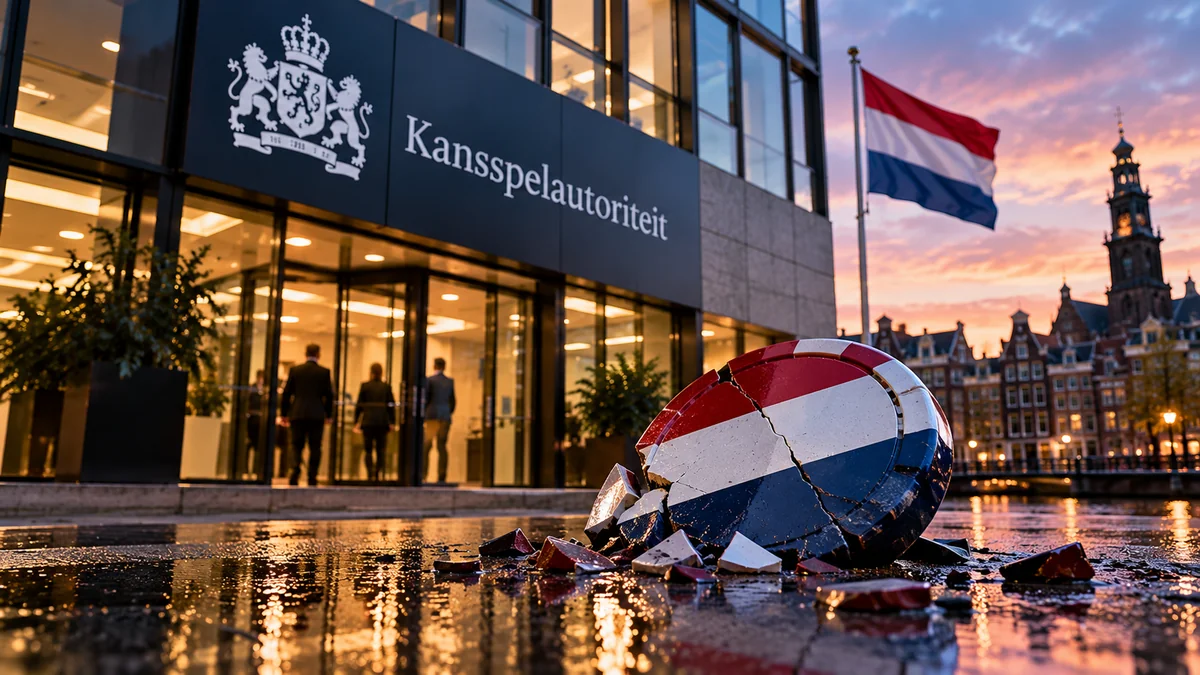
The Kansspelautoriteit has fined EOD Code SRL a record €37.25 million for offering unlicensed gambling to Dutch players via Instantcasino and 11 other sites. Without the legal 10% cap, the penalty would have been €292.6 million.
The Netherlands has just handed out its biggest ever penalty for illegal online gambling. The Dutch gambling regulator, the Kansspelautoriteit (Ksa), has fined EOD Code SRL a record €37.25 million for offering unlicensed casino and sports betting to Dutch players through Instantcasino and eleven other websites. Yet the headline number hides a striking detail: without a legal cap, the fine could have been almost eight times higher.
Regulator: Kansspelautoriteit (Netherlands Gambling Authority)
Fined company: EOD Code SRL
Fine: €37.25 million, the largest ever for illegal gambling in the Netherlands
Sites involved: Instantcasino plus 11 other casino and betting brands
Estimated Dutch GGR (2025): €108.37 million
Uncapped penalty: €292.6 million
Announced: October 22, 2026; the company can still object
Twelve sites, no geo-block
The case began with Instantcasino. Ksa investigators examined the site several times between November 2024 and July 2026, and each time they found the same thing: they could sign up with Dutch personal details, deposit money and play, without ever running into a block for players from the Netherlands.
As the investigation went deeper, more brands came to light. In the end the decision covered twelve websites run by the same company:
| Sites covered by the fine | ||
|---|---|---|
| Instantcasino | Skyhills | Slotmonster |
| Betiro | Betblast | Fastslots |
| Goldenpanda | Sambaslots | Winningz |
| Incognitocasino | Foxygold | Luckypays |
The sites were not just accessible by accident. Registration forms accepted Dutch addresses and phone numbers, and several brands supported Dutch payment methods. In the regulator's view, that made the Netherlands a deliberate market rather than a side effect of an open website.
The list of aggravating factors
Offering gambling without a licence was only the starting point. The Ksa found a long list of practices that made the case more serious and pushed the penalty up:
- No visible age verification, meaning minors could potentially sign up and play
- Cryptocurrency and anonymous payment options, which the regulator says make money laundering easier
- Prohibited games that are not allowed on the Dutch licensed market
- Inactivity fees charged on dormant accounts
- Autoplay and turbo-play features, both seen as high-risk for problem gambling
- Missing or pre-filled player limits, instead of limits players set themselves
The regulator stressed the payment side in particular. Accepting crypto and anonymous methods not only lets players bypass the checks built into the Dutch system, it also creates a clear route for money laundering, which is why it carried extra weight in the decision.
Each of these runs directly against the strict player-protection rules that licensed Dutch operators must follow every day.
From €292.6 million to €37.25 million
The way the fine was calculated is the most revealing part of the case. When standard fines are too small compared with the money earned from illegal activity, the Ksa can switch to a turnover-based penalty. It did exactly that here.
The regulator estimated that EOD Code's sites made €108.37 million in gross gaming revenue from Dutch players in 2025. After adding the aggravating factors, its own method produced a theoretical fine of €292.6 million.
That figure could never be imposed. Dutch law caps fines at 10% of the offender's worldwide turnover in the previous financial year. To work out that ceiling, the Ksa used search-volume data to estimate EOD Code's global 2025 GGR at €372.99 million. Ten per cent of that is €37.30 million, which was then rounded to the final €37.25 million.
The cap in numbers: the fine EOD Code actually received is only about 13% of what the regulator's own method produced. That is still a record, but it also shows why the Ksa has been pushing for the 10% ceiling to be changed.
A new record, seven months after the last one
The previous record stood for barely half a year. In March 2026, the Ksa fined Novatech almost €25 million for very similar offences: Dutch players could register, deposit and play with no effective geo-block or age checks, and crypto and anonymous payments were accepted. At the time, Ksa chairman Michel Groothuizen said that without the 10% cap the Novatech penalty would have exceeded €100 million.
EOD Code was not new to the regulator either. It had already received an order subject to periodic penalty payments, a so-called last onder dwangsom, for offering gambling without a Dutch licence. The new decision is a separate administrative fine on top of that order.
The company now has six weeks from the date the decision was sent to file an objection and pay. If payment comes late, statutory interest can be added.
The bigger battle against the black market
The record fine comes at a difficult moment for the Dutch market. In its 2025 annual report, the Ksa warned that spending on illegal sites had overtaken the licensed market. Channelisation by spend fell from 51% at the end of 2024 to 49% in the first half of 2025, with illegal online GGR estimated at about €617 million against €600 million for licensed operators.
The regulator's answer is not only bigger fines. Through an initiative called Project Disconnect, it works with payment providers, hosting companies, banks and large tech firms to cut illegal sites off from the services they rely on. Paid search ads for illegal casinos have almost disappeared, and illegal .nl domains have been taken down. It is a pattern seen across Europe, from Germany's raids on a suspected €5.86 billion illegal gambling ring to the UK debate over offshore sites.
What it means for players and operators
For Dutch players: Sites without a Dutch licence offer none of the protections players are entitled to. No age checks, pre-filled limits and inactivity fees are exactly the practices regulators want to keep out. If a casino accepts you without any geo-block, that is a warning sign, not a convenience.
For offshore operators: The Ksa is clearly building bigger cases and investigating whole networks of brands, not single sites. Even with the 10% cap, two fines of around €25 million and €37 million in one year send a strong message.
For licensed operators: Strong enforcement helps the legal market, which is losing ground to illegal competitors that ignore costly player-protection rules. As our look at the report putting the illegal gambling market at $50 billion showed, the problem is global.
For lawmakers: The gap between €292.6 million and €37.25 million will add pressure on the government to change the 10% ceiling. Until it does, the biggest illegal operators may still see fines as a cost of doing business.
Gambling involves risk and isn’t suitable for everyone — please only play with licensed operators, gamble responsibly, set your limits, and if it stops being fun, take a break.