October 30, 2026
A Danish Gambling Authority report finds students were more likely to see gambling as entertainment after its school presentations. Young women recognising they had gambled jumped from 19% to 48%, many unaware scratchcards count.
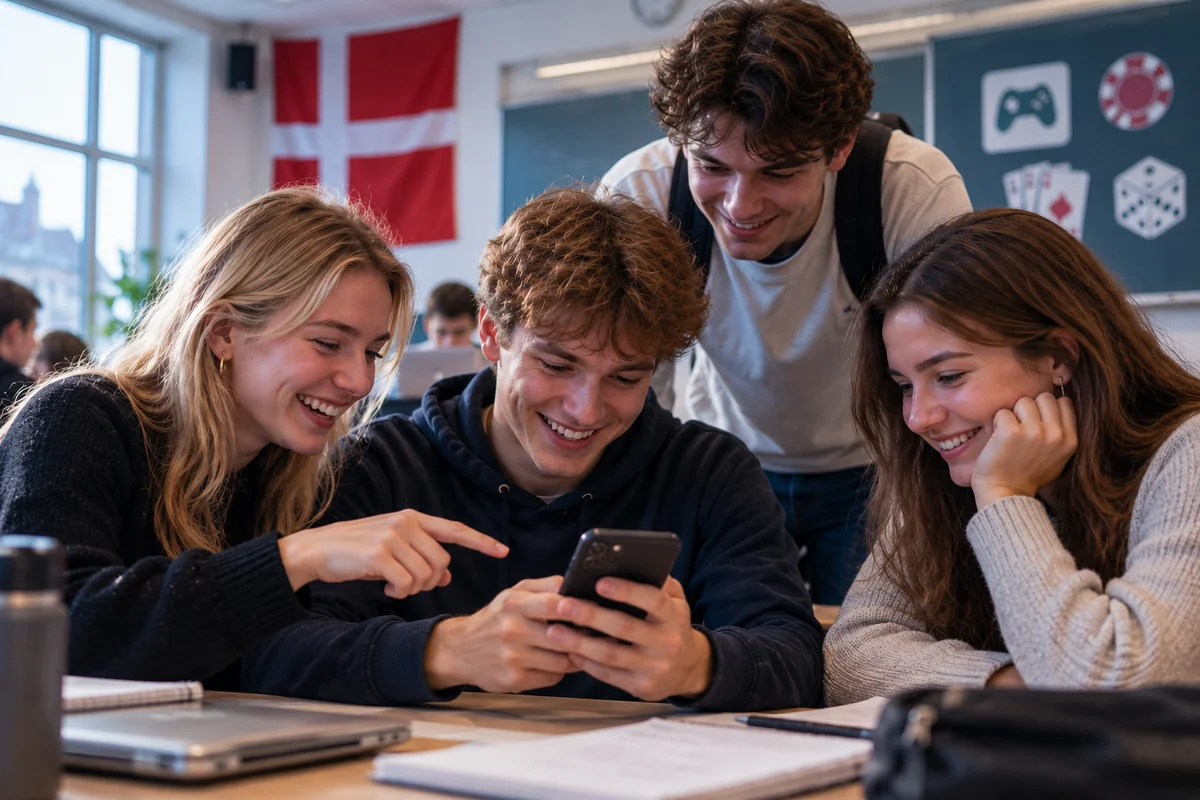
Can a single classroom talk change how teenagers think about gambling? Denmark's gambling regulator, Spillemyndigheden, says its own data suggests it can. A new report on the free presentations it gives at upper-secondary schools finds that, after a visit, students were more likely to see gambling as entertainment rather than a way to make money. They were also better at recognising licensed operators and more aware of what counts as gambling. One finding surprised even the regulator: many young women had no idea that scratchcards are gambling.
Who: Danish Gambling Authority (Spillemyndigheden)
What: free presentations on gambling and game mechanics at youth education institutions
Period studied: September 2024 to March 2025
Responses: 1,433 before the talks, 534 three to six weeks after; students mostly aged 16–20
Headline shift: young women recognising they had gambled rose from 19% to 48%
Licence mark awareness (young men): up from 39% to 61%
How the study worked
Spillemyndigheden has offered free talks to upper-secondary schools and other youth education institutions since 2022. The director, Anders Dorph, says its presentation team now gives more than 100 talks a year around the country. The sessions explain how gambling products work, including payback percentages and game mechanics, and how to tell licensed operators from illegal ones.
For the new report, the regulator sent an online survey to whole classes before a scheduled presentation and again three to six weeks afterwards. It received 1,433 responses in the first round and 534 in the second. Most students were between 16 and 20.
The design has an important limitation, which the report itself acknowledges. Answers could not be matched to individual students across the two rounds, so researchers could not track how any single person's views changed. Far fewer students responded the second time, and the study was carried out by the same authority that runs the talks. The results show a clear difference between the two groups, but not a controlled measure of cause and effect.
From "winning money" to "having fun"
The clearest change was in why students said they gamble. After the presentations, fewer named winning money as their main reason and more described gambling as entertainment. That matches the central message of the sessions: gambling is an entertainment product with a cost, not a way to earn money.
More than three-quarters of students agreed with the key points they were taught:
- All gambling products pay back less than 100% of what is staked over time.
- Making a profit from gambling in the long run is mathematically unlikely.
- The Gambling Authority's logo shows that an operator holds a Danish licence.
- Gambling should be treated as entertainment.
About 69% of respondents agreed or strongly agreed that they felt in control of how much they gambled.
The scratchcard surprise
The most striking result concerned what students thought counted as gambling. Many, especially young women, did not realise that scratchcards are a form of gambling. That includes the Christmas calendar scratchcards that are a popular seasonal gift in Denmark. Among female respondents, the share who recognised they had tried gambling rose from 19% before a presentation to 48% afterwards.
The authors stress that this does not mean more students started gambling after the talks. It means more of them realised that things they had already done, such as scratching a lottery card, were gambling.
"There is a general ignorance about which areas are defined as gambling, so it is an eye-opener for many, especially girls, when we tell them that scratchcards such as Christmas calendar scratchcards are also gambling," said Heine Jakobsen, a special consultant in the Authority's presentation group.
| Measure | Before | After |
|---|---|---|
| Young women who recognised they had gambled | 19% | 48% |
| Young men "very" or "very much" aware of the licence mark | 39% | 61% |
| Agreement with key messages | n/a | 75%+ |
| Felt in control of their gambling | n/a | about 69% |
Spotting licensed operators
The talks also appear to have taught students how to recognise a legal gambling site. Denmark requires licensed operators to display the regulator's licence mark. Among male respondents, the share who said they were "very" or "very much" aware of what the mark means rose from 39% to 61%.
That matters because illegal, unlicensed sites are a growing worry across Europe. Unlicensed operators do not have to verify age, offer self-exclusion or follow advertising rules, and young people who spend a lot of time online are an easy target. Teaching students to look for the licence mark is a low-cost way to steer them towards regulated sites where those protections apply.
"A nuanced view of gambling"
The regulator is clearly pleased with the results. Dorph said it was important to give young people "a nuanced view of gambling and the mechanisms of the game".
"The fact that we can see in black and white that our presentation makes a difference naturally makes me very happy and proud of our efforts," he said.
The programme already has international recognition. In October 2025, the International Association of Gaming Regulators, which brings together regulators from around the world, named the presentations its best responsible or safer gambling initiative. At the time, Dorph said it was crucial that young people understand gambling is entertainment, "not a shortcut to easy money".
Part of a wider push on young people
The report comes as Spillemyndigheden steps up its focus on younger age groups. Earlier this week it launched a campaign called Casino in the Children's Room. The campaign aims to move the conversation about children's digital lives beyond screen time and onto the content and mechanics of the games they play, such as loot boxes and reward systems that resemble gambling.
Denmark is not alone in rethinking how to protect young people. The Netherlands is considering a near-total ban on online gambling advertising as part of its harm-reduction strategy, and Norway's gambling monopoly is under pressure as the last Nordic holdout. Operators are also investing in education; in the US, Hard Rock and Seminole Gaming have expanded their PlayersEdge programme.
What it means
- For regulators: direct education in schools is cheap compared with enforcement, and Denmark now has data, albeit imperfect, to argue that it works.
- For parents: products that feel harmless, such as scratchcards given as gifts, are still gambling, and many teenagers do not see them that way.
- For licensed operators: young people who know how to recognise a licence mark are less likely to drift towards illegal sites.
- For researchers: a matched, independent follow-up study would show whether the changes last beyond a few weeks and whether they affect actual behaviour.
The basic message is simple: the house always has an edge, and gambling is something you pay for, like any other form of entertainment. Denmark's results suggest that many teenagers have not heard it put that plainly before, and that when they do, it changes how they think about it.
Gambling involves risk and isn’t suitable for everyone — please only play with licensed operators, gamble responsibly, set your limits, and if it stops being fun, take a break.